
Gibson Solar Project
King George, Virginia
Overview
About the Project
The Gibson Solar Project is a proposed solar energy initiative by Hanwha Renewables. The project is designed to generate clean energy on working farmland while protecting open land in King George for decades to come. Explore the site and find clear answers and facts about this project and its impact on the community.
Join Us at an Upcoming Open House
L.E. Smoot Memorial Library
9533 King Hwy, King George, VA 22485
Thursday, August 6, 2026 6–8pm
Friday, August 7, 2026 11am–1pm
Additional open house dates for September and October are coming soon.
Discussions
Real Questions.
Real Answers.
King George residents have real questions about Gibson Solar and its impact on the community. You deserve real, honest answers and genuine clarity, so we’re here to address them.

Will this cause more runoff to hit nearby roads?
No, it shouldn’t. We know that when nearby roads flood, the people who live there pay to fix them. An independent reviewer will evaluate the stormwater design before construction starts and ensure everything is sound. Gibson Solar will cover the cost of every hour of that review or any future enforcement.
Will the stormwater hold?
We’re making sure that every basin that drains toward nearby creeks is built larger than state rules require. We estimate there will be about 100 basins across the site. A certified independent inspector will check each one after any rainfall of ¼ inch or more. If anything is found that needs to be fixed, Gibson Solar will cover the cost.

Will this project turn what is currently farmland into an industrial site?
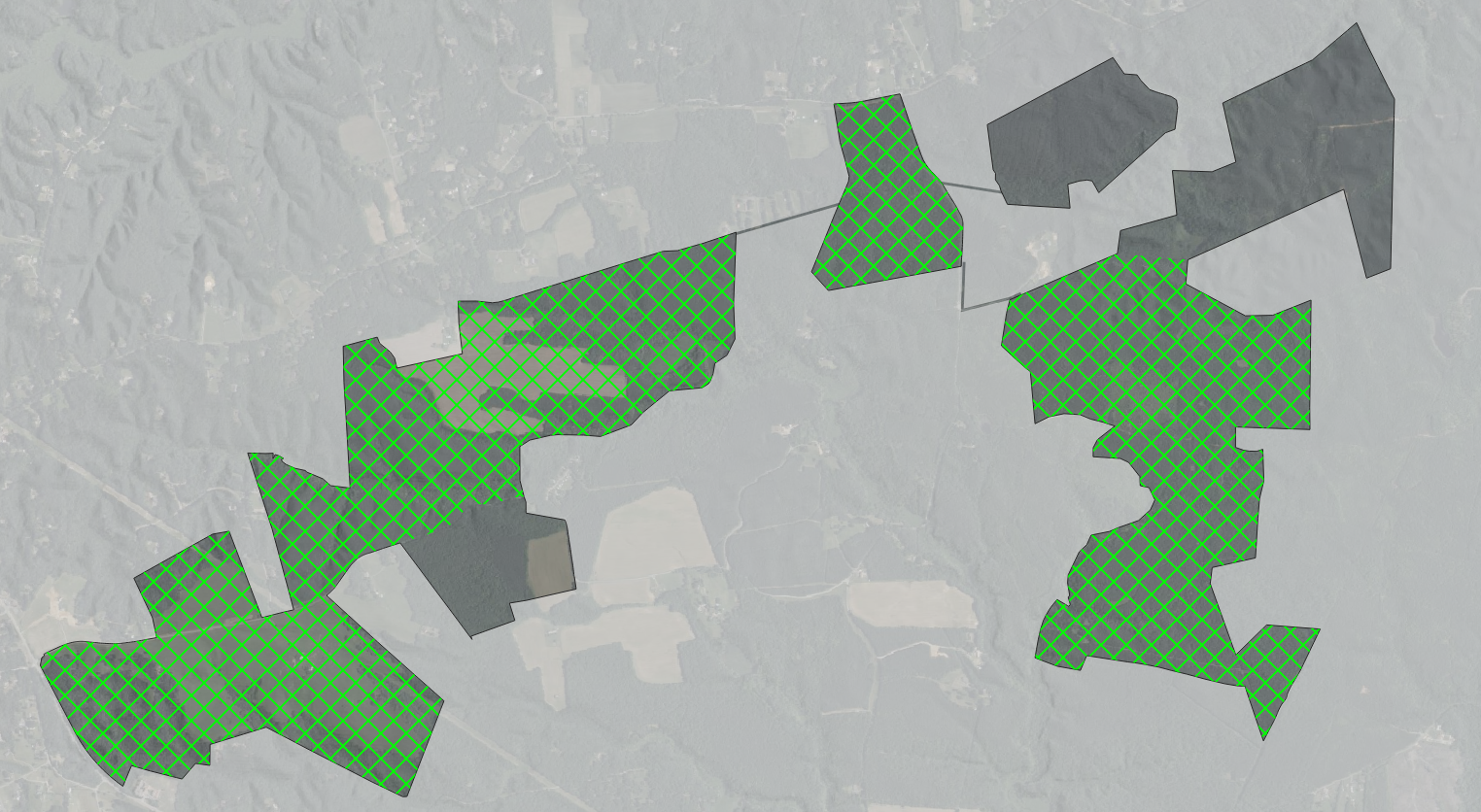
No, it keeps the land actively farmed. Low-profile solar panels will sit on 640 of the project site’s 1,400 acres. In fact, it will actually create more actively used farmland because the project will include full-time sheep grazing operated by a local farmer. 1,130 acres of the land will go under conservation easement, so it can never be developed, no matter the owner.
After the timber on the land is harvested, it will establish a pasture where one does not currently exist. Yes, this involves removing hundreds of acres of trees, but those are commercial pine plantations with trees scheduled to be harvested in 2027–2028, regardless of this project. But because Gibson Solar requires a significant vegetative buffer, many trees will remain, allowing nearby residents to retain a forested view of the land.
What happens to wildlife on the land?
This project has been intentionally designed to minimize effects on native plants and wildlife. Streams, creeks, or wetlands remain outside the fence line so wildlife can still move about freely.
If this land doesn’t become a solar farm, what will happen to it?
It could then be sold and developed in another way, such as a housing development or subdivision. The Gibson Solar Project is the only scenario that includes the conservation easement that prevents it from being developed for those purposes.

If I live near the site, will I see or hear it once it’s operational?
Not at all. Solar panels do not emit any noise. As far as seeing it goes, Gibson Solar is designed to be low profile. Solar panels will only be on less than half of the property and 200 feet from nearby homes. There will also be a generous natural tree buffer.
Is the construction going to be disruptive?
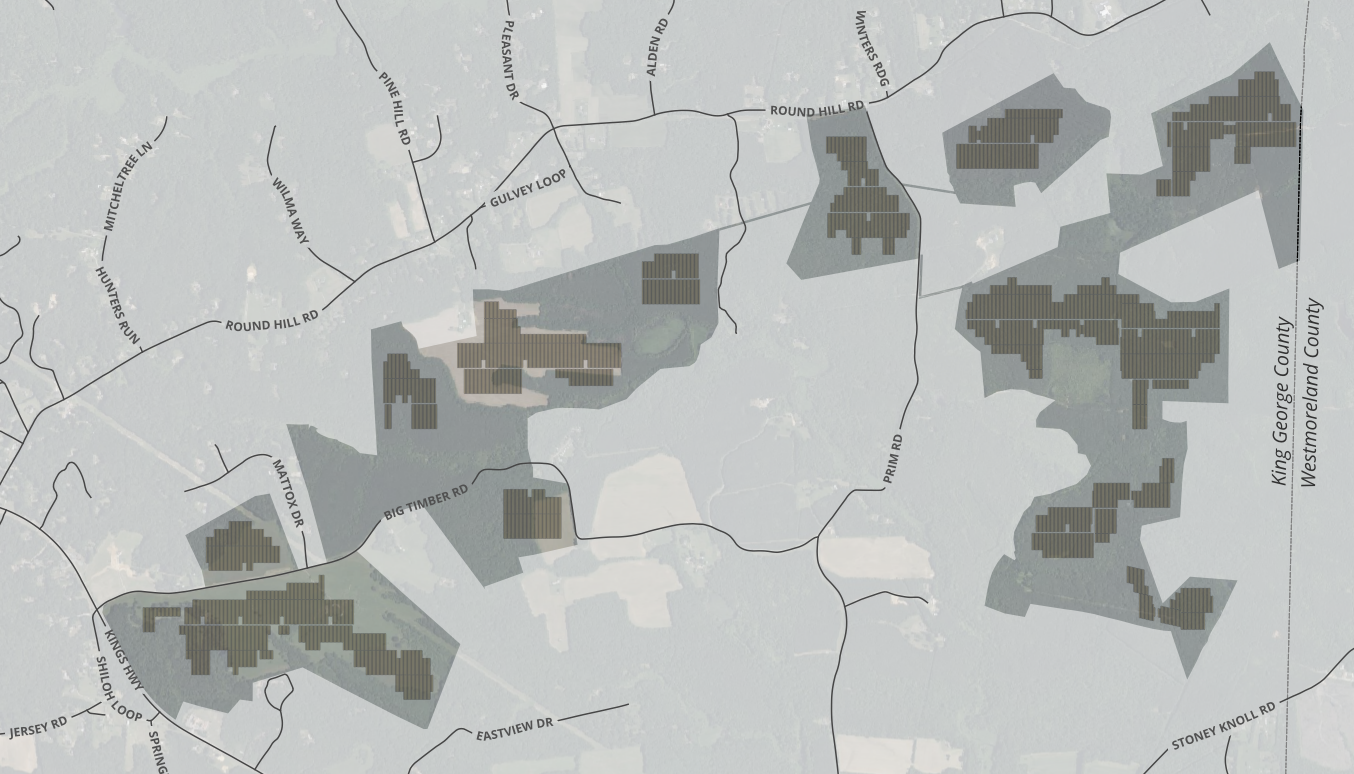
We’re working to avoid disruption during construction. We’ve carefully chosen construction entrances to lessen the impact on residents, with access points on Big Timber Road and Prim Road. Construction won’t use Round Hill Road.

Are solar panels safe?
Yes, very. Solar’s the cleanest, safest source of energy. The panels don’t have any odor, liquids, or gasses, and the metals used in some panels can’t mix with water or vaporize into the air.
What happens at the end of the project’s life? Who is responsible for decommissioning?
There’s a plan in place for this before construction even starts. As required, Gibson Solar will put up a decommissioning bond before construction begins to cover the cost of removing and recycling all equipment. Zero taxpayer dollars will be spent.

Who is behind this project?
The Gibson Solar Project is being developed by Hanwha Renewables, the utility-scale solar and battery energy storage development business of Hanwha Energy USA. Hanwha has a significant renewable energy development footprint in Virginia, with eight past and current projects.
How do I get in touch with someone from Gibson Solar?
The Project Manager is Isaac Leuthold, who will be your primary point of contact. You can reach him at Isaac.Leuthold@hanwharenewables.com with any questions about the project.
How can the community count on commitments being upheld in the long term?
All commitments and guarantees are written into the permits, easements, conditions, and contracts for the project itself. So, they’re not tied to any one company or individual. This means that they stay in place, regardless of who owns the project.
Stats
By The Numbers
An honest look at what's to come with the project.
100 MW
of clean electricity generated can power tens of thousands of homes
640 acres
of solar panels, fenced within a 1,400-acre site
1,130 acres
under a conservation easement, protected from future development forever
$11 million+
in projected tax revenue for King George County throughout the project’s life cycle
$160 million
total project investment
$0 taxpayer dollars
spent on construction, operation, or services
40-year
projected operating life. After that, the land goes back to the way it was
Steps
Project Phases
A start-to-finish rundown of the Gibson Solar Project, with a plan in place for every step.

Site Selection & Design
Scouted and researched to identify the right fit for this project.
Permits & Studies
Reviewed by the county and state, with public input incorporated along the way.
Construction
Expect roughly 12–18 months for site construction. Carefully planned routes and logistics aim to minimize disruption.
Operation & Maintenance
The project will be operational for 40 years. No tax dollars will be used for operation or maintenance. Sheep will graze the land for the duration, keeping it actively farmed.
Removal & Restoration
After 40 years, the landowner will remove and recycle all equipment, returning the land to its original state.
Resources
A Closer Look
Download and take a deeper dive into materials that offer further detail on projected revenue, key locations, site plans, and more.


Opportunities
Solar – And So Much More
Gibson Solar is more than an energy project. It’s an opportunity to keep what's special about your community intact, while building opportunity for the future.
Keeping family farmland active
The land remains actively farmed, with sheep grazing beneath the panels throughout the life of the project, offering a real path for a new generation of farmers.
Ensuring the countryside stays country
A permanent conservation easement attached to this project guarantees that 1,280 acres of land are kept open and working – and can never be developed for residential or commercial use.
Investing in the future
Steady tax revenue means more funds available for schools, roads, and services for decades to come – a truly generational opportunity for King George.

Let's Talk
Community Conversations
Join us at an upcoming open house where Hanwha project representatives will be on hand to discuss the project and answer any questions.
Open Houses
L.E. Smoot Memorial Library
9533 King Hwy, King George, VA 22485
Thursday, August 6, 2026 6–8pm
Friday, August 7, 2026 11am–1pm
If you have questions but can’t make it to either of the open houses, or you want to continue the conversation, you can reach out to Project Manager Isaac Leuthold at isaac.leuthold@hanwharenewables.com.
FAQs
Gibson Solar will be an approximately $160 million investment located on private property (both owned and leased) in an area of relatively low population density east of Kings Highway along Big Timber Road and between Prim Road and Stoney Knoll. The project has been designed to minimize impact on residents and to tie into existing electrical infrastructure.
The Gibson Solar project will include solar panels on just 640 acres of the project’s 1,400 acres. This will allow ample space for generous setbacks that reduce visibility of the panels.
Gibson Solar is designed to generate 100 MW of electricity – enough to power tens of thousands of homes.
Gibson Solar will generate an estimated $11 million in tax revenue for King George County over the project’s life cycle – roughly 30 times what the land would generate if it remained forest and pasture. This will allow the county to keep taxes low and invest in priorities like schools, roads, parks, and public safety.
A previous development team pursued a version of this project in the past. This proposal has since been adjusted and optimized by the solar development professionals at Hanwha Renewables, one of the world’s leading solar development companies, to maximize the benefits to King George County while minimizing potential impacts.
No, in fact, it will likely create more actively used farmland because the project will include a full-time sheep grazing operated by a local farmer.
Not likely. Numerous academic studies have shown that clean energy generation facilities like Gibson Solar have no measurable impact on property values, and in some cases have positive effects. The tax revenue created by Gibson Solar will allow the county to keep property taxes low, ensuring more working farms can stay in families and long-time residents can remain on their properties.
None. No taxpayer money will be spent on Gibson Solar. In fact, Gibson Solar is projected to generate $11 million in tax revenue over the project’s life cycle for the community to invest in lower property taxes, schools, roads, public safety, open-space preservation, and other priorities.
It will be situated behind 100 feet of trees. Gibson Solar has been carefully designed for extremely low visibility for nearby residents. Less than half of the property will feature solar arrays, and the project will place panels at 12 feet rather than the 15 feet allowed by county ordinance to further reduce visibility. Panels will be 200 feet from residences and 100 feet from adjacent parcels.
While the final timeline depends largely on permitting decisions by local and state authorities, the current plan is to begin construction in spring 2028 with the project coming online by the end of 2029.
Gibson Solar has been designed to minimize disruption during construction and operation. Construction entrances have been chosen to minimize impact on residents, including planned access points on Big Timber Road and Prim Road. It is important to note that construction activity is not planned to utilize Round Hill Road. Construction is expected to last approximately 12 to 18 months during which time there may be construction delivery vehicles entering and exiting the site each day.